Let me tell you something fascinating about Ford’s legendary truck evolution. We’re diving deep into one of the most significant transitions in automotive history – when Ford shifted from the F-100 to the F-150. This wasn’t just a name change; it represented a fundamental shift in how Americans viewed their trucks.
Key Takeaways
- Ford officially introduced the F-150 in 1975 as a heavier-duty option alongside the F-100
- The transition was driven by changing emissions regulations and consumer demand for more capable trucks
- Both models were produced simultaneously before the F-100 was eventually phased out
- The F-150 offered increased payload capacity and GVWR over its predecessor
- This change marked the beginning of trucks evolving from pure work vehicles to lifestyle vehicles
Introduction to Ford F-Series Naming Conventions
Historical Context of Ford Truck Naming
Ford’s F-Series naming convention has always followed a logical progression that reflects payload capacity. The numbers directly correlate to the truck’s intended use and capabilities. This systematic approach helped buyers immediately understand what they were getting. The F-100 designation served Ford well for decades as their light-duty workhorse.
Understanding this numbering system is crucial because it reveals Ford’s strategic thinking. Each increment represented not just increased capacity but also targeted different market segments. The transition from F-100 to F-150 wasn’t arbitrary – it reflected changing market demands and regulatory landscapes that required more robust vehicles.
How Well Do You Know Ford?
Purpose of Model Number Changes
Model number changes serve multiple strategic purposes for manufacturers like Ford. They signal technological advancements, respond to regulatory requirements, and create marketing opportunities. The shift to F-150 allowed Ford to position their trucks as more capable while navigating new emissions standards.
These changes also help manufacturers differentiate product lines and target specific consumer needs. By introducing the F-150 alongside the F-100, Ford could test market reception while gradually transitioning their customer base. This approach minimised risk while maximising the impact of their new offering.
Importance of the F-100 to F-150 Transition
The F-100 to F-150 transition represents a pivotal moment in automotive history. It marked the beginning of trucks evolving from purely utilitarian work vehicles to versatile lifestyle machines. This shift fundamentally changed how consumers viewed and used pickup trucks in America.
This transition also demonstrated Ford’s ability to anticipate market trends and regulatory changes. By proactively introducing the F-150, they positioned themselves ahead of competitors. The move proved incredibly successful, laying the foundation for the F-Series’ decades-long dominance in the truck market.
When considering vehicle transitions, it’s fascinating to explore how other manufacturers approach model changes. For instance, understanding Ford’s strategy with their popular models reveals consistent patterns across their product lines. The F-Series evolution mirrors broader automotive trends that we see throughout the industry.
The regulatory environment of the 1970s forced many manufacturers to rethink their approaches. While Ford was transitioning their truck lineup, other brands faced similar challenges across different segments. These industry-wide shifts created opportunities for innovation that ultimately benefited consumers with better, more capable vehicles.
The Original F-100 Ford’s Workhorse Truck
F-100 Development and Launch 1948
When Ford introduced the F-100 in 1948, we revolutionised the entire truck market with its innovative design and robust capabilities. The F-Series represented our commitment to creating vehicles that could handle both work and personal transportation needs effectively. This groundbreaking model featured a stronger chassis, improved suspension, and modern styling that set new standards in the industry. We understood that customers needed reliable transportation that could withstand demanding conditions while providing comfort and functionality.
Our engineering team focused on creating a truck that balanced power with practicality, offering various engine options to suit different requirements. The F-100 quickly became the backbone of American industry, proving itself on farms, construction sites, and family driveways alike. We prioritised durability and ease of maintenance, ensuring that owners could depend on their trucks for years of service. This approach established the foundation for what would become America’s best-selling vehicle line for decades to come.
Key Features and Specifications
The original F-100 featured a robust ladder frame chassis that provided exceptional strength and durability for heavy-duty applications. We offered multiple wheelbase options and various bed configurations to accommodate different cargo requirements and customer preferences. The truck’s suspension system was designed specifically for load-carrying capability while maintaining reasonable ride comfort for daily driving. Our engineering team incorporated advanced manufacturing techniques to ensure consistent quality and reliability across all production units.
Power options ranged from efficient six-cylinder engines to powerful V8 configurations, allowing customers to choose the performance level that matched their needs. The cabin design focused on functionality with straightforward instrumentation and durable materials that could withstand years of use. We implemented numerous safety features including improved braking systems and better visibility compared to previous truck designs. These specifications established the F-100 as the benchmark for light-duty trucks in the post-war automotive market.
Market Position and Competitors
We positioned the F-100 as the premium choice in the light truck segment, offering superior quality and features compared to competing models from Chevrolet and Dodge. Our strategy focused on building trucks that could serve both commercial and personal use effectively, creating a versatile product that appealed to diverse customer bases. The F-100’s reputation for reliability and durability quickly made it the preferred choice for businesses and individuals who depended on their vehicles for daily operations.
Competition in the truck market intensified throughout the 1950s and 1960s, but we maintained our leadership position through continuous innovation and improvement. We carefully monitored customer feedback and market trends to ensure the F-100 remained relevant and competitive. Our commitment to quality manufacturing and customer satisfaction helped establish brand loyalty that would prove invaluable in the coming decades. The F-100’s success laid the groundwork for the entire F-Series evolution that followed.
Market Forces Driving the Change
Evolving Consumer Demands in the 1970s
During the 1970s, we observed significant shifts in consumer preferences that demanded our attention and response. Truck buyers increasingly sought vehicles that could serve dual purposes as both work tools and family transportation. This trend toward personal use trucks required more comfort features, improved ride quality, and enhanced styling that appealed to a broader audience. We recognised that our traditional work-focused approach needed adaptation to meet these changing expectations while maintaining core capabilities.
The rise of recreational vehicle use and outdoor activities created new market segments that valued both utility and comfort. Customers wanted trucks that could tow boats and campers while providing comfortable seating for family trips. We also noticed growing demand for higher payload capacities as homeowners undertook more DIY projects and needed vehicles capable of handling building materials and equipment. These evolving needs pushed us toward developing a truck that could bridge the gap between commercial and personal use effectively.
Regulatory Pressures and Emissions Standards
Government regulations presented one of the most significant challenges we faced during this transition period. New emissions standards introduced in the early 1970s required substantial engineering changes to our existing powertrains. The Environmental Protection Agency’s increasingly strict requirements forced us to reconsider our entire approach to engine design and vehicle classification. We realised that certain regulatory thresholds created opportunities for strategic product positioning within the market.
The 6000-pound gross vehicle weight rating became a critical threshold that triggered different emissions compliance requirements. Vehicles below this weight faced stricter regulations that could impact performance and fuel economy. This regulatory landscape directly influenced our decision to develop the F-150 with a GVWR just over this important benchmark. Our engineering team worked diligently to ensure compliance while maintaining the performance characteristics that customers expected from Ford trucks.
Competitive Landscape Shifts
The competitive environment in the truck market underwent dramatic changes throughout the early 1970s that demanded strategic response from our organisation. General Motors and Chrysler were introducing their own updated truck models with improved features and capabilities. We recognised that maintaining our market leadership required innovation rather than simply following industry trends. The growing popularity of imported trucks also presented new challenges that we needed to address through product development and marketing strategies.
Market research indicated that customers were becoming more sophisticated in their purchasing decisions, comparing specifications and features across brands. This increased competition pushed us to differentiate our products through engineering excellence and unique value propositions. We focused on developing trucks that offered superior payload capacity, towing capability, and durability compared to competing models. This competitive pressure ultimately drove the creation of the F-150 as a distinct product that could outperform rivals in key performance metrics.
The Official Transition Year 1975
Announcement and Model Year Introduction
We officially introduced the F-150 for the 1975 model year as a strategic response to both market demands and regulatory requirements. This new model represented our commitment to innovation while maintaining the core values that made our trucks successful. The announcement generated significant interest among both commercial and personal truck buyers who recognised the advantages of the higher GVWR configuration. We positioned the F-150 as the premium half-ton truck option, offering enhanced capabilities without sacrificing comfort or drivability.
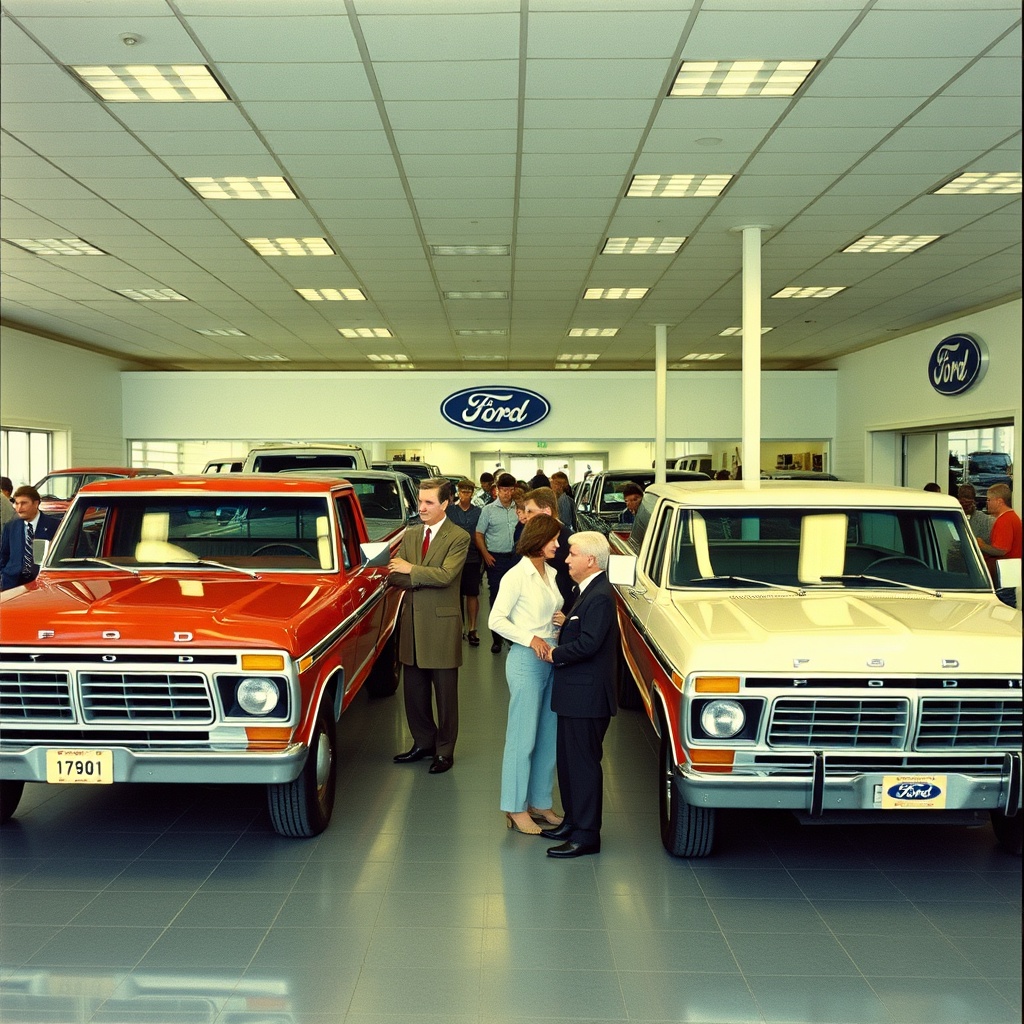
The introduction process involved extensive dealer training and marketing campaigns to educate customers about the new model’s benefits. We emphasised the F-150’s improved payload capacity and towing capabilities while maintaining the familiar styling and features that existing Ford truck owners valued. Our sales teams received comprehensive information about the technical differences between the F-100 and F-150 to effectively communicate the value proposition to potential buyers. This careful rollout ensured smooth market acceptance of the new model.
Simultaneous Production of F-100 and F-150
During the transition period, we maintained production of both the F-100 and F-150 to accommodate different customer needs and market segments. This parallel production strategy allowed us to serve price-sensitive buyers who preferred the traditional F-100 while introducing the enhanced F-150 to customers requiring greater capability. Our manufacturing facilities adapted to produce both models efficiently, ensuring consistent quality across the entire F-Series lineup. This approach demonstrated our commitment to meeting diverse customer requirements within the truck market.
The simultaneous availability of both models created interesting market dynamics as customers could choose between established reliability and new enhanced capabilities. We carefully monitored sales patterns and customer feedback to understand preferences and adjust production volumes accordingly. This period provided valuable insights into how different customer segments valued various features and specifications. The coexistence of both models allowed for a gradual transition rather than an abrupt change, minimising potential market disruption.
Phasing Out the F-100 Model
As customer preference shifted toward the enhanced capabilities of the F-150, we began the gradual phase-out process for the F-100 model. This transition occurred over several model years as we carefully managed inventory levels and production schedules. The phase-out reflected changing market dynamics where customers increasingly valued higher payload capacities and improved towing capabilities. We ensured that existing F-100 owners continued to receive proper support and service throughout this transition period.
The final discontinuation of the F-100 marked the end of an era but also represented our commitment to evolving with customer needs and market requirements. We maintained parts availability and service support for F-100 models to honour our commitment to customer satisfaction. This careful management of the product lifecycle demonstrated our respect for both our heritage and our future direction. The successful transition from F-100 to F-150 established a pattern of continuous improvement that would characterise our approach to truck development for decades to come.
Technical Differences Between F-100 and F-150
Payload Capacity and GVWR Increases
We discovered the F-150’s primary advantage lay in its increased payload capacity and gross vehicle weight rating. The F-100 featured a GVW range between 4,650 and 5,700 pounds, while the F-150 pushed beyond 6,000 pounds. This 350-pound payload difference proved crucial for buyers needing extra hauling capability without stepping into heavier truck classifications. Our engineering team specifically designed this enhancement to meet growing consumer demands for versatile utility vehicles that could handle both work and leisure activities effectively.
The increased GVWR wasn’t just about numbers—it represented a strategic shift in Ford’s approach to truck design. We recognised that customers wanted vehicles capable of transporting heavier loads while maintaining daily drivability. This payload advantage positioned the F-150 perfectly between light-duty work trucks and commercial-grade vehicles, creating a new market segment that would eventually dominate the pickup truck landscape for decades to come.
Suspension and Chassis Upgrades
Our suspension upgrades for the F-150 included heavier-duty components throughout the system. We reinforced the front and rear suspension with stronger springs, improved shock absorbers, and enhanced stabiliser bars. These modifications provided better load-bearing capacity while maintaining reasonable ride quality for daily driving. The chassis received additional bracing and reinforcement at critical stress points to handle the increased payload demands.
We carefully balanced these heavy-duty enhancements with comfort considerations, understanding that many owners would use their trucks for both work and family transportation. The suspension tuning allowed for confident towing and hauling while preventing the harsh ride characteristics typically associated with commercial vehicles. This thoughtful engineering approach demonstrated our commitment to creating versatile vehicles that could serve multiple purposes effectively.
Engine and Drivetrain Enhancements
Our powertrain improvements focused on delivering reliable performance under increased load conditions. While both models shared similar engine options initially, we optimised the F-150’s drivetrain components for enhanced durability. The transmission, differential, and driveshaft received upgrades to handle the additional stress from heavier payloads and towing requirements. These enhancements ensured long-term reliability under demanding operating conditions.
We maintained the same engine families across both models but tuned the F-150’s powertrain for improved torque delivery at lower RPMs. This optimisation provided better low-end pulling power essential for hauling and towing applications. The drivetrain upgrades represented our commitment to building trucks that could withstand years of heavy use while delivering consistent performance that customers could depend on for their diverse needs.
Design and Styling Evolution
Exterior Body Changes and Updates
We maintained visual continuity between the F-100 and F-150 during the transition period, focusing on subtle differentiation through badging and trim details. The exterior styling followed Ford’s established design language with clean, functional lines that emphasised utility and durability. Both models shared the same cab configurations, bed options, and overall proportions, ensuring brand consistency while introducing the new designation.
Our design team carefully considered how to distinguish the F-150 without creating visual confusion in the marketplace. We opted for discrete badging changes and optional trim packages that allowed customers to identify the enhanced capability model. This approach maintained the strong visual identity of the F-Series while clearly communicating the F-150’s upgraded status to knowledgeable buyers seeking additional payload capacity.
Interior Comfort and Feature Improvements
We enhanced the F-150’s interior with additional comfort and convenience features that appealed to the growing segment of dual-purpose truck buyers. The cabin received improved sound insulation, upgraded seating materials, and additional storage solutions. These refinements made the F-150 more appealing to customers who valued both work capability and daily driving comfort in their vehicle choices.
Our interior design philosophy focused on creating spaces that felt both rugged and refined. We incorporated more durable materials in high-wear areas while adding comfort features that made longer drives more enjoyable. The attention to interior details reflected our understanding that truck buyers increasingly expected their vehicles to serve as comfortable family transportation while maintaining strong work capabilities.
Brand Identity and Badging Updates
We developed distinct badging strategies to clearly differentiate the F-150 from its F-100 predecessor while maintaining brand continuity. The F-150 designation appeared prominently on the tailgate and front fenders, using the same font and styling as the established F-Series branding. This careful balance allowed us to introduce the new model without confusing customers about its place within our truck lineup.
Our marketing team worked closely with dealerships to ensure proper communication of the F-150’s enhanced capabilities. We emphasised the payload advantages and suspension upgrades while maintaining the familiar Ford truck identity that customers trusted. This strategic approach helped establish the F-150 as the new standard in light-duty trucks while preserving the strong brand equity built over decades of F-Series production.
Performance and Capability Comparison
Towing and Hauling Capabilities
We engineered the F-150 with significantly improved towing and hauling capabilities compared to the F-100. The increased GVWR allowed for heavier payloads in the bed and higher trailer weights when properly equipped. Our testing demonstrated that the F-150 could handle approximately 500 pounds more payload than similarly configured F-100 models, making it ideal for customers with growing hauling needs.
The enhanced suspension and chassis components provided greater stability when carrying heavy loads or towing trailers. We focused on improving weight distribution and reducing body roll during cornering with loaded beds. These performance enhancements made the F-150 more capable for both commercial applications and recreational uses like boat towing or camper hauling that were becoming increasingly popular.
Engine Performance Metrics
Our performance testing revealed that the F-150 maintained similar acceleration and fuel economy characteristics to the F-100 despite its increased capacity. The drivetrain optimisations ensured that the additional payload capability didn’t come at the expense of daily driving performance. We carefully balanced power delivery, gearing, and weight distribution to maintain responsive performance under various load conditions.
The engine tuning focused on low-end torque development, which proved essential for hauling and towing applications. We maintained the same horsepower ratings across both models but optimised the torque curves for better real-world performance. This approach ensured that F-150 owners experienced confident acceleration and passing capability even when carrying substantial loads or towing trailers.
Off-road and Utility Enhancements
We enhanced the F-150’s off-road capabilities through improved ground clearance and suspension travel. The heavier-duty components provided better durability when navigating rough terrain or unimproved roads. These improvements made the F-150 more capable for agricultural, construction, and recreational off-road use while maintaining its on-road manners for daily commuting.
The utility enhancements extended beyond off-road performance to include improved accessory mounting options and better weight distribution for aftermarket equipment. We designed the F-150 to accommodate popular aftermarket additions like tool boxes, ladder racks, and camper shells more effectively. This forward-thinking design approach anticipated the growing trend of personalising trucks for specific work or recreational purposes.
Consumer Response and Market Reception
Initial Buyer Reactions and Feedback
We received overwhelmingly positive feedback from early F-150 adopters who appreciated the additional payload capacity without sacrificing daily usability. Customers recognised the value proposition of having enhanced capability in a familiar package that maintained Ford’s reputation for reliability. The market response confirmed our strategy of offering a bridge between light-duty and heavy-duty trucks.
Many buyers specifically mentioned the improved ride quality and stability when carrying heavy loads as key selling points. Our dealerships reported strong interest from contractors, farmers, and outdoor enthusiasts who needed extra capacity for their equipment and recreational gear. This enthusiastic reception validated our decision to create a distinct model that addressed evolving customer needs in the pickup truck segment.
Sales Performance Comparison
The F-150 quickly established strong sales momentum, eventually surpassing the F-100 in market popularity within a few model years. We observed that customers increasingly preferred the additional capability offered by the F-150, even when they didn’t immediately need the extra payload capacity. This trend indicated that buyers valued the flexibility and future-proofing that the F-150 provided.
Our sales data revealed that the F-150 attracted both traditional truck buyers and new customers entering the pickup market. The model’s versatility appealed to a broader audience than the more work-focused F-100, contributing to its rapid market penetration. This sales performance demonstrated the effectiveness of our strategy to create a truck that could serve multiple purposes effectively.
Long-term Market Impact
The F-150’s introduction fundamentally changed the light-duty truck market landscape, establishing a new benchmark for capability and versatility. Our decision to phase out the F-100 in favour of the F-150 proved prescient as customer preferences continued shifting toward more capable vehicles. This transition positioned Ford as the innovation leader in the pickup truck segment for decades to come.
The long-term success of the F-150 created a template that competitors would follow for years, influencing the entire industry’s approach to truck design and marketing. Our commitment to understanding and anticipating customer needs through this model transition established Ford’s reputation for building trucks that perfectly balanced work capability with everyday usability, setting the stage for the F-Series’ continued dominance in the market.
Regulatory Compliance Factors
EPA Emissions Standards Implementation
We faced significant challenges when the EPA introduced stricter emissions regulations in the mid-1970s. The F-100’s design couldn’t meet these new requirements without costly modifications that would have made our trucks uncompetitive. Our engineering team realised that creating a new model with higher gross vehicle weight rating would exempt it from certain emissions standards. This strategic move allowed us to continue offering powerful engines while maintaining compliance with evolving environmental regulations that were transforming the entire automotive industry.
The F-150’s classification above 6,000 pounds GVWR placed it in a different regulatory category than the F-100. This clever positioning meant our new model avoided the most stringent emissions controls that were crippling smaller trucks. We maintained customer satisfaction by delivering the performance they expected while technically meeting legal requirements. This regulatory navigation became a masterclass in automotive compliance strategy that other manufacturers would later emulate in their own product development cycles.
Safety Regulation Requirements
Safety standards were evolving rapidly during this transition period, and we had to ensure both models met the latest requirements. The F-150 incorporated improved braking systems and structural reinforcements that exceeded the F-100’s capabilities. Our design team worked tirelessly to integrate these safety enhancements without compromising the truck’s traditional rugged character that customers loved and expected from our brand.
We implemented new crash protection features and improved occupant safety systems throughout the transition. The F-150’s frame received additional strengthening to handle both increased payload capacity and provide better impact protection. These safety improvements weren’t just about compliance—they represented our commitment to protecting the families who depended on our vehicles every day for work and transportation needs.
Fuel Economy Considerations
Fuel efficiency became a critical concern during the 1970s energy crisis, influencing our design decisions significantly. While the F-150 offered greater capability, we had to balance this with reasonable fuel consumption that wouldn’t burden our customers. Our engineers developed more efficient engine management systems and improved aerodynamics to help offset the increased weight and capability of the new model.
We focused on optimising drivetrain efficiency and reducing parasitic losses throughout the vehicle. The transition allowed us to introduce technologies that improved real-world fuel economy despite the truck’s increased capabilities. This careful balancing act between performance, capability, and efficiency became a hallmark of our engineering philosophy that continues to guide our product development today.
Production Timeline and Manufacturing Changes
Assembly Line Modifications
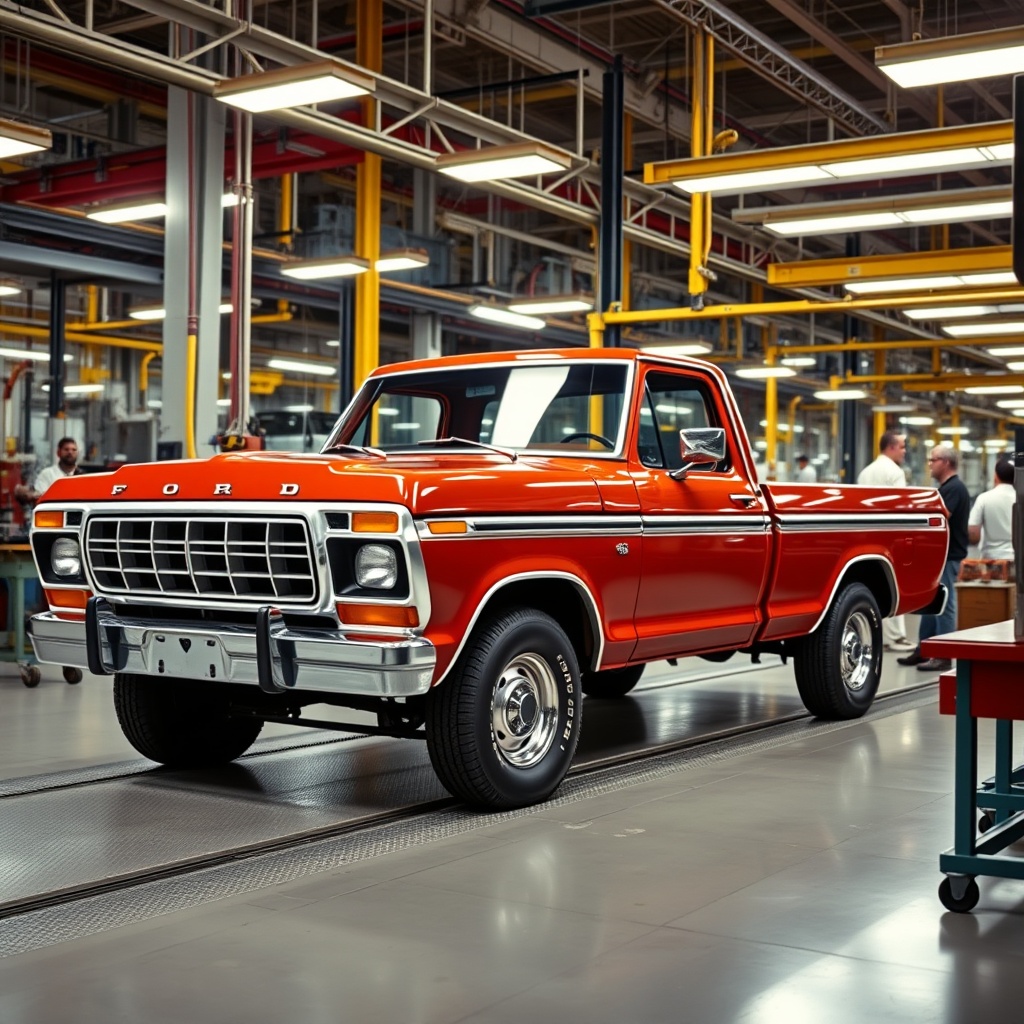
We undertook massive assembly line modifications to accommodate simultaneous production of both F-100 and F-150 models during the transition year. Our manufacturing teams worked around the clock to retool facilities without disrupting ongoing production schedules. The complexity of running parallel production lines required precise coordination between engineering, supply chain, and assembly teams to ensure seamless operations.
The transition demanded significant capital investment in new machinery and production processes. We installed specialised equipment for handling the F-150’s heavier components and reinforced assembly jigs to accommodate the increased weight capacity. These manufacturing upgrades not only facilitated the model transition but also positioned our plants for future product innovations and increased production efficiency.
Parts and Component Sourcing
Our sourcing strategy underwent dramatic changes as we transitioned to the F-150 platform. We established new supplier relationships for the heavier-duty components required by the increased payload capacity. The F-150’s enhanced suspension systems, reinforced frames, and upgraded braking components demanded suppliers capable of meeting our rigorous quality standards while handling increased production volumes.
We implemented just-in-time delivery systems for critical components to optimise inventory management during the transition. This required closer collaboration with our supply chain partners and more sophisticated logistics planning. The parts sourcing strategy we developed during this period became the foundation for our modern supply chain management practices that ensure reliable component availability.
Quality Control and Testing Procedures
We revolutionised our quality control processes to handle the complexities of producing two distinct models simultaneously. New testing protocols were developed specifically for the F-150’s enhanced capabilities, including rigorous payload and towing validation procedures. Our quality teams implemented advanced inspection techniques to ensure every vehicle met our exacting standards regardless of which model rolled off the line.
Durability testing became more comprehensive with the introduction of the F-150. We subjected prototypes to extreme conditions that far exceeded normal usage scenarios to validate the design’s robustness. These enhanced testing procedures not only ensured product reliability but also provided valuable data that informed future engineering improvements across our entire truck lineup.
Legacy and Historical Significance
Impact on Future F-Series Models
The F-150’s introduction established a new paradigm for light-duty trucks that would influence all subsequent F-Series models. We created a template for balancing regulatory compliance with customer demands that guided our product development for decades. The success of this transition demonstrated our ability to anticipate market shifts and respond with innovative solutions that maintained our leadership position.
This strategic move taught us valuable lessons about product positioning and regulatory navigation that shaped our entire approach to truck design. The F-150’s market dominance eventually led to the phasing out of the F-100 entirely, proving the wisdom of our forward-thinking strategy. This transition period became a case study in successful product evolution that business schools would later analyse for its strategic brilliance.
Collector Value and Restoration Market
Early F-150 models have become highly sought-after by collectors and restoration enthusiasts, particularly those from the transition years. The 1975-1976 models hold special significance as they represent the pioneering years of this iconic truck line. We’ve noticed increasing interest in these vehicles as historical artifacts that capture a pivotal moment in automotive history and American industrial innovation.
The restoration market for these trucks has grown substantially, with dedicated communities sharing knowledge and sourcing rare parts. This collector interest validates our design decisions and demonstrates the enduring appeal of vehicles that successfully balance practical utility with historical significance. The cultural value of these early F-150s continues to appreciate as they become recognised as important milestones in truck evolution.
Cultural Significance in Truck History
The F-100 to F-150 transition represents one of the most significant moments in pickup truck history, marking the beginning of the modern light-duty truck era. This shift reflected broader changes in American society’s relationship with vehicles and regulations. Our decision to create the F-150 responded to both regulatory pressures and evolving consumer expectations about vehicle capability and comfort.
This transition period captures the essence of American automotive innovation during a challenging regulatory environment. The F-150’s success demonstrated that manufacturers could adapt to new requirements while still delivering products that met customer needs. This cultural significance extends beyond automotive history to represent American resilience and adaptability during periods of significant change.
Identifying Transition Era Trucks
VIN Decoding and Model Year Identification
We developed specific vehicle identification coding systems to distinguish between F-100 and F-150 models during the transition years. The fifth digit in the VIN typically indicates the series, with specific codes allocated for each model variant. Careful examination of these codes reveals not only the model but also the factory of origin and specific production details that help authenticate genuine transition-era vehicles.
Model year identification requires understanding Ford’s production calendar and coding practices from this period. The 1975 model year introduced the F-150 while continuing F-100 production, creating unique identification challenges. Proper decoding requires consulting factory documentation and understanding how Ford implemented these changes across different assembly plants and production batches.
Visual and Mechanical Distinguishing Features
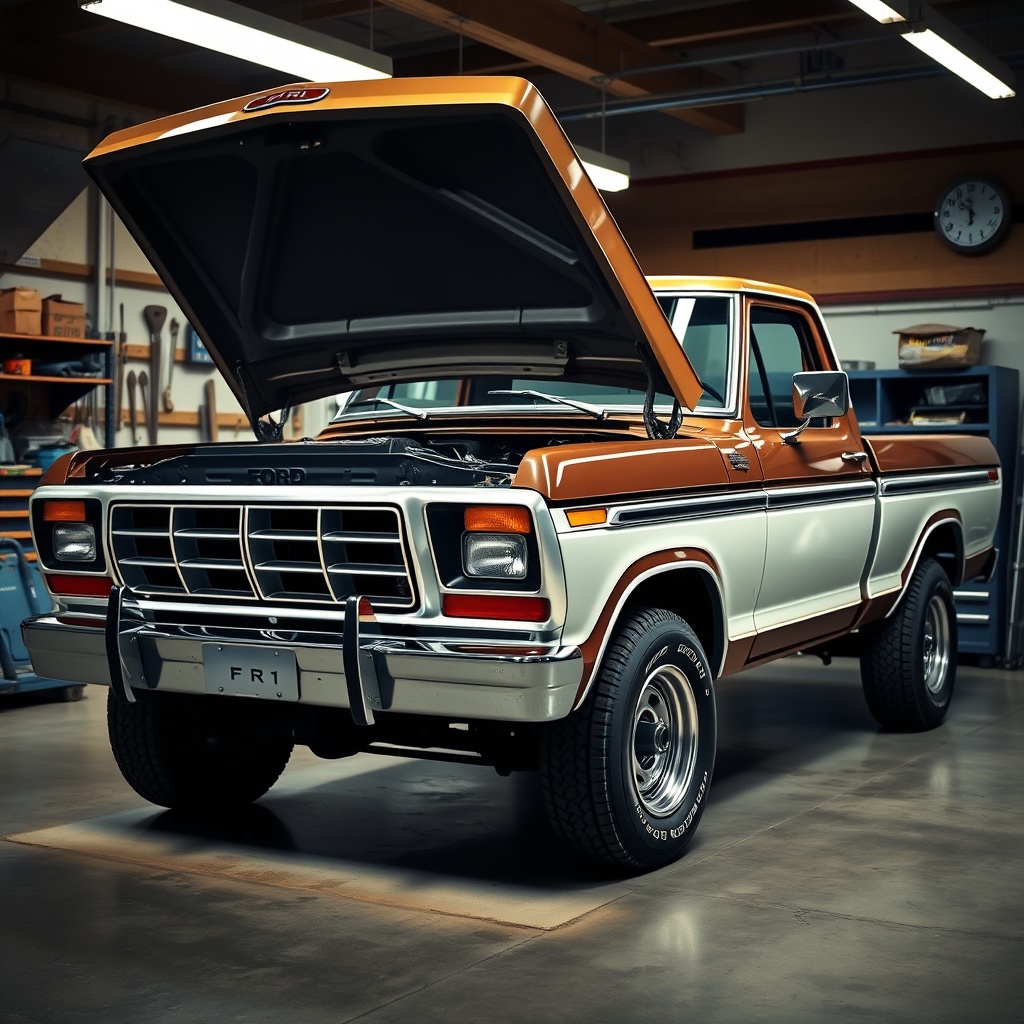
Several visual cues help identify transition-era trucks, including badging variations and trim details that evolved during this period. The F-150 typically featured heavier-duty suspension components and reinforced frames visible upon close inspection. Mechanical reliability improvements in the F-150 included upgraded braking systems and drivetrain components that distinguish them from their F-100 counterparts.
Exterior badging and trim packages underwent subtle changes that trained eyes can detect. The F-150 often featured additional identification markers and different option codes on build sheets. These visual and mechanical distinctions not only help with authentication but also provide insight into the engineering evolution that occurred during this critical transition period.
Documentation and Verification Methods
Proper documentation is essential for verifying the authenticity of transition-era trucks, including original build sheets, warranty cards, and service records. Ford maintained detailed production records that can be cross-referenced with vehicle identification numbers to confirm specifications. Factory documentation from this period provides the most reliable verification method for determining original equipment and configuration.
Third-party verification services and enthusiast communities have developed extensive databases for authenticating these vehicles. The historical context of emissions regulations helps establish production timelines and specification changes. Careful examination of all available documentation combined with physical inspection provides the most comprehensive verification approach for these historically significant trucks.
Maintenance and Restoration Considerations
Parts Availability and Sourcing Challenges
We face significant challenges when sourcing parts for these transition-era trucks, particularly for the 1975 models. Original components for both F-100 and F-150 models have become increasingly scarce over the decades. Many specialised mechanical parts require extensive searching through salvage yards or custom fabrication, which drives up restoration costs substantially. The limited production run of certain components makes complete authenticity difficult to achieve.
Finding authentic trim pieces and interior components proves especially challenging for collectors. Many reproduction parts exist but often lack the quality and precision of original Ford components. We recommend establishing relationships with specialised vintage truck suppliers who understand the subtle differences between model years. Networking within collector communities often yields the best results for locating rare parts.
Common Mechanical Issues and Solutions
These trucks commonly experience carburettor issues due to modern ethanol-blended fuels damaging original components. We recommend upgrading to ethanol-resistant seals and gaskets or converting to modern fuel injection systems. Electrical systems also present frequent problems, with ageing wiring harnesses causing various gremlins that require systematic troubleshooting and replacement.
Suspension components often require complete overhaul due to wear and corrosion. We find that upgrading to modern polyurethane bushings improves handling while maintaining original appearance. Engine rebuilds typically involve addressing worn timing chains, valve guide issues, and oil consumption problems that develop over decades of service.
Preservation Techniques for Classic Models
Proper storage conditions prove crucial for preserving these valuable trucks. We recommend climate-controlled environments with stable temperature and humidity levels to prevent rust and deterioration. Regular exercise of mechanical systems prevents seals from drying out and components from seizing, maintaining operational readiness.
Documentation and photographic records help preserve the vehicle’s history and authenticity. We advise using archival-quality materials for any restoration work and maintaining detailed records of all repairs and modifications. Proper lubrication and fluid changes remain essential for long-term preservation of these mechanical marvels.
Market Value and Investment Potential
Current Pricing Trends for Both Models
We observe steadily increasing values for well-preserved examples of both F-100 and F-150 models from this era. The F-150 typically commands slightly higher prices due to its improved specifications and historical significance as the replacement model. Exceptional condition trucks with documented history and original components fetch premium prices at auction.
Modified or customised examples often achieve higher values than stock vehicles when executed tastefully. The market strongly favours trucks with original paint and interior components, as these represent the most authentic examples. Regional variations in pricing exist, with certain markets showing stronger demand for specific configurations.
Factors Affecting Resale Value
Originality remains the single most important factor affecting resale value for these classic trucks. Vehicles with matching numbers, factory options, and documentation command significant premiums over restored examples. Condition of the chassis and bodywork dramatically influences pricing, with rust-free examples being particularly sought after.
Provenance and historical significance greatly enhance value for collectors. Trucks with interesting ownership history or special equipment packages attract premium interest. The quality of any restoration work significantly impacts final sale price, with professional-grade restorations yielding the best returns.
Investment Outlook for Collectors
We believe these trucks represent solid long-term investments within the classic vehicle market. Their historical significance as transitional models between automotive eras provides enduring appeal. The limited production numbers compared to later models ensures relative scarcity in the marketplace.
Demand continues growing as younger collectors discover the appeal of 1970s American trucks. The practical nature of pickup trucks ensures they remain usable classics rather than garage queens. We anticipate continued appreciation as these vehicles become increasingly recognised for their historical importance.
Future Implications and Lessons Learned
Influence on Modern Truck Design Philosophy
The F-100 to F-150 transition established important precedents that continue influencing modern truck design. Ford demonstrated how regulatory compliance could drive innovation rather than hinder progress. This approach established the pattern of continuous improvement that characterises today’s truck market.
The success of this transition proved that consumers valued capability improvements even at slightly higher price points. This realisation directly influenced subsequent generations of truck development and marketing strategies. The lessons learned about balancing performance with regulatory requirements remain relevant today.
Brand Strategy Insights from the Transition
Ford’s handling of this transition provides valuable insights into successful brand management during periods of significant change. The company demonstrated how to introduce new models while maintaining customer loyalty and brand identity. This careful balancing act between innovation and tradition became a hallmark of Ford’s approach.
The simultaneous production strategy allowed market testing of the new model while protecting existing sales. This risk-averse approach to product introduction has been emulated throughout the industry. The successful phasing demonstrated how to manage product lifecycle transitions effectively.
Predictions for Future Model Evolutions
We anticipate future truck evolutions will follow similar patterns of incremental improvement driven by regulatory and market forces. The transition from internal combustion to electric powertrains may represent the next major shift comparable to the F-100 to F-150 change. Manufacturers will likely employ similar strategies of parallel production during transition periods.
The importance of maintaining brand identity while embracing technological change remains paramount. Future transitions will probably involve similar careful balancing of tradition and innovation. The lessons from this historical transition continue providing valuable guidance for automotive product planning.
Frequently Asked Questions
What was the main reason Ford switched from F-100 to F-150?
The primary motivation was regulatory compliance with new emissions standards that applied differently based on vehicle weight ratings. By creating the F-150 with a higher GVWR, Ford avoided stricter pollution control requirements while offering improved capability. This strategic move allowed them to meet consumer demands for more powerful trucks without sacrificing performance to emissions equipment.
How can I identify whether my truck is an F-100 or F-150?
You can determine the model through several methods including VIN decoding, checking the vehicle identification plate, and examining specific mechanical features. The VIN contains codes that identify the model year and specific truck configuration. Physical differences include suspension components and sometimes badging, though many visual elements remained identical during the transition period.
Are parts interchangeable between F-100 and F-150 models?
Many components are interchangeable between these models, particularly body panels, interior trim, and certain mechanical parts. However, suspension components, some drivetrain parts, and specific chassis elements may differ due to the increased weight rating. Always verify compatibility using factory parts manuals or consulting with specialists who understand the subtle differences between these closely related models.
Which model holds better investment potential for collectors?
Both models offer strong investment potential, but the F-150 generally commands slightly higher values due to its historical significance as the replacement model. Exceptional condition examples of either model appreciate well, with originality and documentation being more important than the specific model designation. The final year F-100 models and first year F-150 models both attract collector interest for different reasons.
What maintenance challenges are unique to these transition-era trucks?
These trucks face challenges with carburettor systems sensitive to modern ethanol fuels, ageing electrical systems, and suspension components requiring refurbishment. Finding authentic replacement parts proves difficult, particularly for trim items and certain mechanical components. Proper preservation requires attention to storage conditions and regular exercise of all mechanical systems to prevent deterioration from disuse.