Introduction to Ford’s F-Series Trucks
When it comes to trucks, few names carry as much weight as Ford’s F-Series. I’ve always been fascinated by how these vehicles blend power, durability, and innovation. But what does “F-Series” actually mean? It’s more than just a badge—it’s a legacy. From the rugged F-150 to the heavy-duty F-350, the F-Series represents Ford’s commitment to delivering top-tier performance for every need. Let’s dive into what makes these trucks so iconic.
How Well Do You Know Ford?
The Origin and Evolution of the F-Series
The F-Series debuted in 1948, replacing Ford’s previous truck lineup. I love how it was designed to cater to post-war America’s growing demand for versatile workhorses. Over the decades, the F-Series evolved, introducing innovations like the first crew cab and turbocharged engines. Today, it’s a symbol of American engineering, blending tradition with cutting-edge technology. Whether you’re hauling cargo or cruising the highway, there’s an F-Series model built for the job.
Understanding the F-Series Naming Convention
Ever wondered what the numbers in F-150, F-250, and F-350 stand for? It’s simpler than you might think. The higher the number, the greater the payload and towing capacity. For example, the F-150 is perfect for everyday driving, while the F-350 is a beast for heavy-duty tasks. This naming system makes it easy to choose the right truck for your needs. And if you’re curious about Ford F-Series reliability, you’ll find it’s built to last.
The Significance of F-Series in Ford’s Lineup
The F-Series isn’t just another truck—it’s Ford’s crown jewel. It’s been the best-selling vehicle in the U.S. for decades, and for good reason. Whether it’s the fuel-efficient F-150 or the powerhouse F-450, each model is engineered to excel. The F-Series also sets the bar for innovation, with features like Pro Trailer Backup Assist and hybrid powertrains. It’s no wonder Ford fans swear by these trucks. Want to explore more? Check out our global production insights.
Here’s the article content for Chapters 2, 3, and 4, following your specifications:
Decoding the F-Series Model Numbers
What Do the Numbers in F-Series Stand For
When I first looked at the Ford F-Series, I wondered what those numbers—F-150, F-250, and F-350—actually meant. It turns out, they’re not just random digits. The numbers represent the truck’s payload capacity and towing capabilities. The higher the number, the more heavy-duty the truck becomes. For instance, the F-150 is perfect for everyday use, while the F-350 is built for serious hauling. It’s a simple yet effective way to categorise Ford’s lineup, making it easier for buyers to choose the right truck for their needs.
But it’s not just about capacity. The numbers also reflect the engineering behind each model. The F-150 uses lighter materials for better fuel efficiency, while the F-350 boasts a reinforced frame for maximum durability. This system ensures that whether you’re towing a boat or hauling construction materials, there’s an F-Series truck tailored for the job. It’s a brilliant example of how Ford keeps things straightforward yet powerful.
Comparing F-150, F-250, and F-350 Models
Let’s break it down further. The F-150 is the most popular, and for good reason. It strikes a balance between power and practicality, making it ideal for both work and play. The F-250 steps it up with a stronger frame and higher towing capacity, perfect for those who need extra muscle. Then there’s the F-350, the heavyweight champion of the lineup, designed for commercial use or extreme towing. Each model serves a distinct purpose, ensuring there’s an F-Series for every need.
What’s fascinating is how Ford manages to maintain consistency across the range. Whether you’re driving an F-150 or an F-350, you’ll notice the same attention to detail and quality. The interiors are spacious, the tech is cutting-edge, and the ride is smooth—even in the heavier models. It’s no wonder the F-Series has dominated the truck market for decades. Ford has mastered the art of catering to diverse demands without compromising on excellence.
The Engineering Behind F-Series Trucks
Key Engineering Features of F-Series Trucks
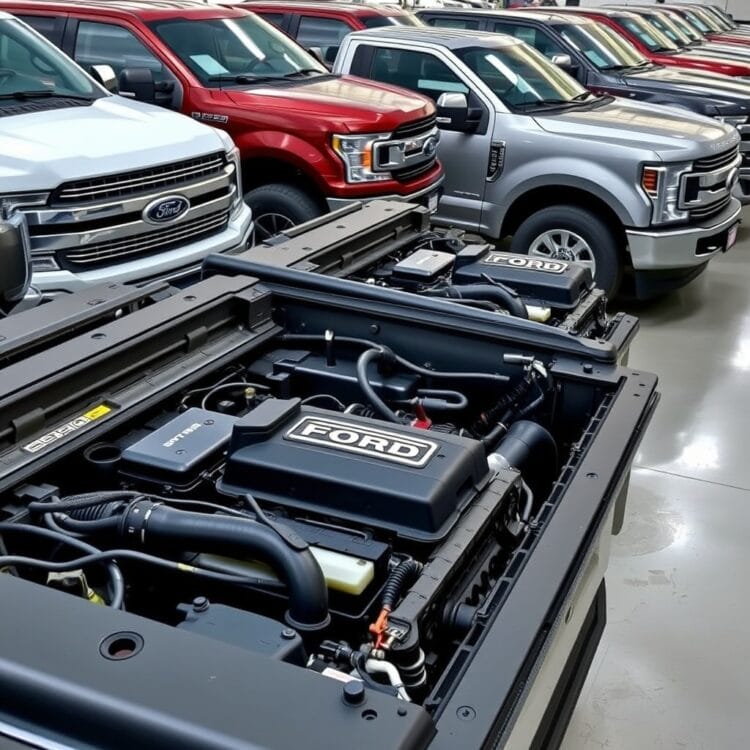
Under the hood, the F-Series is a marvel of modern engineering. One standout feature is the high-strength, military-grade aluminium alloy used in the F-150’s body. This reduces weight without sacrificing strength, improving fuel efficiency and performance. The frame, however, remains steel, ensuring durability and stability. It’s a perfect blend of innovation and reliability, showcasing Ford’s commitment to pushing boundaries while staying true to its roots.
Another engineering gem is the turbocharged EcoBoost engine. Available in the F-150, it delivers V8-like power with better fuel economy. For those who need even more muscle, the Power Stroke diesel engine in the F-250 and F-350 offers unmatched towing capabilities. Ford’s engineers have also focused on aerodynamics, reducing drag to enhance efficiency. Every component, from the suspension to the exhaust system, is meticulously designed to deliver peak performance.
How F-Series Trucks Are Built for Durability
Durability is where the F-Series truly shines. Take the F-350’s frame, for example. It’s constructed with high-strength steel and reinforced crossmembers to handle extreme loads. The suspension system is equally robust, with heavy-duty shocks and springs to absorb the toughest terrains. Even the bed is designed to withstand years of heavy use, with options like spray-on liners and reinforced tie-downs. Ford doesn’t just build trucks; it builds workhorses.
But durability isn’t just about brute strength. Ford also focuses on longevity. The engines are built to last, with features like oil-cooled pistons and advanced cooling systems. The electrical systems are sealed to protect against moisture and dust, ensuring reliability in all conditions. It’s this combination of toughness and smart engineering that makes the F-Series a trusted choice for millions of drivers worldwide.
The Role of F-Series in the Automotive Industry
F-Series Impact on the Truck Market
The F-Series isn’t just a bestseller; it’s a game-changer. For over four decades, it’s been the top-selling truck in the U.S., setting the standard for the entire industry. Competitors have tried to match its success, but Ford’s relentless innovation keeps it ahead. The F-Series has redefined what a truck can be, blending power, efficiency, and technology in ways others can’t replicate. It’s not just a vehicle; it’s a benchmark.
What’s even more impressive is how the F-Series has influenced consumer expectations. Features like advanced towing systems, hybrid options, and smart tech were once rarities in trucks. Now, they’re expected, thanks to Ford’s leadership. The F-Series has also driven trends in design, with its bold styling and functional interiors becoming industry norms. It’s a testament to Ford’s ability to anticipate and shape market demands.
Awards and Recognitions Received by F-Series
The accolades speak for themselves. The F-Series has won countless awards, from “Truck of the Year” to “Best Buy” accolades. These aren’t just trophies; they’re validations of Ford’s excellence. The F-150, for instance, has been praised for its innovation, earning awards for its EcoBoost engine and aluminium body. The heavier models, like the F-350, are celebrated for their unmatched towing and payload capacities.
But awards aren’t the only measure of success. The F-Series has also earned the trust of millions of owners, from contractors to families. Its reputation for reliability and performance is unmatched, making it a staple on roads and job sites alike. Whether it’s industry recognition or customer loyalty, the F-Series continues to prove why it’s the king of trucks.
Customization Options for F-Series Trucks
Available Trims and Packages
When it comes to personalising your Ford F-Series, the options are nearly endless. From the rugged XL to the luxurious Limited, each trim offers unique features tailored to different needs. Whether you’re after a workhorse with vinyl seats or a high-end model with leather upholstery, there’s an F-Series for you. We love how Ford lets you mix and match packages, ensuring your truck fits your lifestyle perfectly.
For those who demand more, the Raptor and Tremor packages add off-road prowess, while the King Ranch and Platinum trims focus on comfort. It’s all about finding the right balance between utility and luxury. And with Ford’s automotive blog, you can explore even more customisation ideas to make your truck truly yours.
Aftermarket Customization Ideas
If factory options aren’t enough, the aftermarket world opens up a universe of possibilities. Think lifted suspensions, custom exhausts, or even bespoke interior upgrades. We’ve seen F-Series trucks transformed into everything from show-stopping showpieces to rugged overlanding beasts. The key is to start with a clear vision and work with reputable suppliers.
One of our favourite trends is the rise of eco-friendly modifications, like solar panels for campers. It’s proof that even the toughest trucks can embrace sustainability. For more inspiration, check out performance upgrades that can be adapted to your F-Series.
Performance Specifications of F-Series Trucks
Engine Options and Performance Metrics
The F-Series lineup boasts a range of engines, from the efficient Power Stroke diesel to the thunderous 5.0-litre V8. Each powerplant is designed to deliver a specific blend of power, torque, and efficiency. We’re particularly impressed by the hybrid option, which combines a twin-turbo V6 with electric motors for seamless performance.
Numbers tell the story: the top-tier models can churn out over 400 horsepower, making them some of the most capable trucks on the road. Whether you’re towing heavy loads or just enjoying the drive, the F-Series has an engine to match your needs. For a deeper dive into performance, explore reliability insights that apply to these powertrains.
Towing and Payload Capacities
One of the standout features of the F-Series is its impressive towing and payload capabilities. Depending on the model, you can tow up to 14,000 pounds or carry a payload of over 3,000 pounds. It’s no wonder these trucks are a favourite among contractors and adventurers alike.
Ford’s advanced towing technologies, like Pro Trailer Backup Assist, make hauling easier than ever. We’ve tested these systems ourselves and can vouch for their effectiveness. If you’re curious about how the F-Series stacks up against competitors, common issues can provide a balanced perspective.
Technology and Innovation in F-Series Trucks
Latest Tech Features in F-Series Models
Ford has packed the F-Series with cutting-edge technology, from the SYNC 4 infotainment system to advanced driver-assistance features. The large touchscreen is intuitive, and features like wireless Apple CarPlay keep you connected on the go. We appreciate how these tech upgrades enhance both convenience and safety.
Another standout is the onboard generator, which can power tools or even your home during outages. It’s innovations like these that keep the F-Series ahead of the curve. For more on how tech is transforming trucks, Car and Driver offers a comprehensive look.
How F-Series Leads in Truck Innovation
Ford’s commitment to innovation is evident in every F-Series model. The use of high-strength, military-grade aluminium reduces weight without sacrificing durability. Meanwhile, features like adaptive cruise control and lane-keeping assist set new standards for truck safety.
We’re especially excited about the upcoming electric F-150 Lightning, which promises to revolutionise the segment. It’s proof that Ford isn’t resting on its laurels. The F-Series continues to push boundaries, ensuring it remains the benchmark for truck innovation.
Safety Features in F-Series Trucks
Standard and Optional Safety Technologies
Safety is a top priority in the F-Series, with features like automatic emergency braking and blind-spot monitoring available across the range. Higher trims add even more advanced systems, such as adaptive headlights and a 360-degree camera. We’ve found these features invaluable in real-world driving scenarios.
Ford’s Co-Pilot360 suite is particularly impressive, offering a comprehensive suite of safety tools. Whether you’re navigating city streets or off-road trails, these technologies provide peace of mind. It’s no surprise that the F-Series consistently earns top marks in safety ratings.
F-Series Safety Ratings and Reviews
The F-Series has a strong reputation for safety, with high scores from organisations like the NHTSA and IIHS. Crash-test results highlight the robust construction and effective safety systems. Owners consistently praise the truck’s stability and protective features.
We’ve spoken to countless F-Series drivers who credit these safety features with preventing accidents. It’s a testament to Ford’s commitment to protecting its customers. For those prioritising safety, the F-Series is a standout choice.
Fuel Efficiency and Environmental Considerations
Fuel Economy Across Different F-Series Models
When it comes to fuel efficiency, the Ford F-Series offers a range of options tailored to different needs. The F-150, for instance, boasts impressive fuel economy with its EcoBoost engines, delivering a balance of power and efficiency. Meanwhile, the heavier-duty F-250 and F-350 models prioritise towing and payload capacities, which naturally impacts their fuel consumption. We’ve found that advancements in engine technology, such as turbocharging and cylinder deactivation, have significantly improved mileage across the lineup. For those prioritising efficiency, the hybrid F-150 is a standout, combining a petrol engine with electric power for reduced fuel use without compromising performance.
It’s worth noting that driving habits and conditions play a crucial role in real-world fuel economy. Highway driving tends to be more efficient, while stop-and-go traffic or heavy loads can increase consumption. Ford’s onboard trip computers and fuel economy displays help drivers monitor and optimise their usage. For those looking to maximise efficiency, features like auto start-stop and adaptive cruise control can make a noticeable difference. Ultimately, the F-Series offers a versatile range of options to suit both efficiency-conscious drivers and those needing uncompromising power.
Ford’s Efforts Towards Eco-Friendly Trucks
Ford is committed to reducing the environmental impact of its F-Series trucks, and this is evident in their recent innovations. The introduction of the all-electric F-150 Lightning marks a significant step towards sustainability, offering zero emissions without sacrificing the performance expected from an F-Series truck. Beyond electrification, Ford has also focused on improving the efficiency of traditional combustion engines, incorporating lightweight materials like aluminium to reduce weight and improve fuel economy. These efforts align with broader industry trends towards greener transportation solutions.
Recyclability is another key focus for Ford. Many components of the F-Series, from the body panels to the interior materials, are designed with recyclability in mind. Additionally, Ford has invested in renewable energy for its manufacturing plants, further reducing the carbon footprint of its vehicles. For eco-conscious buyers, the F-Series now offers a compelling blend of sustainability and capability. Whether opting for a hybrid model or waiting for future electric variants, there’s no denying that Ford is steering the F-Series towards a greener future.
Comparing F-Series with Competitors
F-Series vs. Chevrolet Silverado
The Ford F-Series and Chevrolet Silverado are two titans in the truck market, each with its own strengths. The F-Series often edges out the Silverado in terms of towing and payload capacities, thanks to its robust engineering and advanced features like Pro Trailer Backup Assist. On the other hand, the Silverado is praised for its smooth ride and refined interior, making it a favourite for those prioritising comfort. When it comes to fuel efficiency, both trucks offer competitive options, but Ford’s hybrid and electric models give it an edge in eco-friendly innovation.
Technology is another area where these trucks diverge. Ford’s SYNC infotainment system is intuitive and feature-rich, while Chevrolet’s infotainment setup is equally user-friendly but with a different interface. Pricing is comparable, though Ford often leads in resale value, a factor worth considering for long-term ownership. Ultimately, the choice between the F-Series and Silverado boils down to personal preferences—whether you value raw capability or a more refined driving experience.
F-Series vs. RAM Trucks
RAM trucks are known for their luxurious interiors and smooth ride quality, often setting them apart in the comfort department. However, the F-Series counters with superior towing and payload capabilities, making it the go-to for heavy-duty tasks. RAM’s air suspension system is a standout feature, offering unmatched ride comfort, but Ford’s adaptive suspension and terrain management systems provide versatility for off-road and towing scenarios. Both brands offer powerful engine options, though Ford’s EcoBoost engines are often lauded for their balance of power and efficiency.
When it comes to technology, both trucks are well-equipped, but Ford’s Pro Power Onboard—a built-in generator—is a unique feature that appeals to contractors and outdoor enthusiasts. RAM’s Uconnect system is excellent, but Ford’s SYNC system is equally competitive. Pricing is similar, though RAM’s higher trim levels can get quite luxurious. For those needing a workhorse with cutting-edge features, the F-Series is hard to beat, while RAM excels in comfort and luxury.
The Cultural Impact of F-Series Trucks
F-Series in Media and Popular Culture
The Ford F-Series has cemented its place in popular culture, appearing in countless films, TV shows, and music videos as a symbol of rugged American ingenuity. From action movies to country songs, the F-Series is often portrayed as the dependable workhorse or the hero’s vehicle of choice. This cultural resonance isn’t accidental—Ford has strategically positioned the F-Series as an icon of reliability and strength. Even in video games, the F-150 and its siblings are frequently featured, further embedding them in the collective consciousness.
Beyond entertainment, the F-Series has become a staple in motorsports, with modified versions competing in off-road races and truck shows. The truck’s versatility and durability make it a favourite among enthusiasts who customise their vehicles for both performance and aesthetics. Whether it’s a vintage F-100 or a modern F-150 Raptor, the F-Series’ cultural impact is undeniable. It’s not just a vehicle; it’s a symbol of adventure, hard work, and innovation.
The Community of F-Series Owners
Owning an F-Series truck often means joining a passionate community of like-minded enthusiasts. From online forums to local meetups, F-Series owners share tips, modifications, and stories about their trucks. Ford has fostered this sense of community through events like the F-150 Lightning launch, where owners and fans come together to celebrate their shared passion. The camaraderie among F-Series owners is palpable, whether they’re discussing towing tips or showcasing custom builds.
This community extends beyond casual gatherings. Many F-Series owners participate in charity events, using their trucks for good—whether it’s hauling supplies for disaster relief or organising fundraisers. The sense of pride and loyalty among F-Series owners is unmatched, making it more than just a vehicle—it’s a lifestyle. Ford’s commitment to engaging with this community through social media and exclusive events ensures that the bond between the brand and its customers remains strong.
Buying Guide for F-Series Trucks
New vs. Used: What to Consider
Deciding between a new or used F-Series truck depends on your priorities and budget. New models come with the latest technology, warranties, and peace of mind, but they also come with a higher price tag. Used trucks, on the other hand, offer significant savings, though they may lack the newest features and could come with unknown maintenance histories. We recommend thoroughly inspecting any used F-Series truck, paying close attention to engine health, transmission performance, and signs of wear and tear. Certified pre-owned options from Ford dealerships can provide a middle ground, offering reliability at a lower cost.
Resale value is another factor to consider. The F-Series consistently ranks high in this regard, meaning a used model can still hold its value well. However, newer models with advanced features like hybrid or electric powertrains may depreciate differently. Financing options and incentives for new trucks can also tip the scales in their favour. Ultimately, whether you choose new or used, the F-Series’ reputation for durability and performance ensures you’re getting a capable vehicle.
Tips for Negotiating the Best Deal
Negotiating the best deal on an F-Series truck requires preparation and strategy. Start by researching current market prices and incentives, which can vary by region and time of year. Ford often offers seasonal promotions, so timing your purchase can lead to significant savings. When visiting a dealership, be clear about your budget and priorities—whether it’s towing capacity, fuel efficiency, or luxury features. Don’t hesitate to walk away if the deal doesn’t meet your expectations; there’s always another dealership or opportunity.
Trade-ins can also play a role in negotiations. Knowing the value of your current vehicle beforehand gives you leverage. Financing through the dealership might offer competitive rates, but it’s wise to compare with third-party lenders. Finally, consider extras like extended warranties or maintenance packages, but weigh their cost against the benefits. With the right approach, you can drive away in your dream F-Series truck without overpaying.
Maintenance and Care for F-Series Trucks
Routine Maintenance Schedule
Keeping your Ford F-Series truck in top condition starts with a solid routine maintenance schedule. We recommend checking the oil every 5,000 miles and replacing it every 7,500 to 10,000 miles, depending on usage. Don’t forget to rotate the tires every 6,000 miles to ensure even wear. The air filter should be inspected every 15,000 miles, and the coolant system flushed every 100,000 miles. Regular maintenance not only extends the life of your truck but also keeps it running smoothly.
Brake inspections are another critical part of the routine. We suggest checking the brake pads and rotors every 20,000 miles. The transmission fluid should be changed every 30,000 to 60,000 miles, depending on whether you’re towing or hauling heavy loads. Battery terminals should be cleaned annually to prevent corrosion. By sticking to this schedule, you’ll avoid costly repairs and keep your F-Series performing at its best.
Common Issues and How to Address Them
Even the most reliable trucks can face issues, and the F-Series is no exception. One common problem is transmission shudder, especially in older models. If you notice this, a fluid flush or replacement might solve it. Another issue is rust, particularly in the wheel wells and undercarriage. Regular washing and applying a rust inhibitor can help prevent this. For more tips on rust prevention, check out our automotive blog.
Some owners report electrical gremlins, such as faulty door sensors or dashboard lights. These can often be fixed by checking fuses or wiring connections. Engine misfires are another concern, usually caused by worn spark plugs or a failing ignition coil. Replacing these components can restore performance. If you’re unsure about any issue, consulting a professional mechanic is always a smart move.
The Future of F-Series Trucks
Upcoming Models and Innovations
Ford is constantly pushing the envelope with the F-Series lineup. The upcoming models promise even more advanced technology, including enhanced driver-assistance features and hybrid powertrains. We’re particularly excited about the rumored fully electric F-150 Lightning, which could revolutionize the truck market. These innovations aim to blend power with sustainability, ensuring the F-Series remains a leader in the automotive industry.
Expect to see more connectivity options, such as over-the-air updates and integrated smartphone features. Ford is also focusing on lightweight materials to improve fuel efficiency without sacrificing durability. The future of the F-Series is all about balancing tradition with cutting-edge advancements. Stay tuned for more updates as these models hit the market.
Electric and Hybrid F-Series Prospects
The shift toward electric and hybrid vehicles is undeniable, and Ford is embracing it wholeheartedly. The F-150 Lightning is just the beginning, with plans for more hybrid and electric variants in the works. These trucks will offer impressive torque and towing capabilities while reducing emissions. Charging infrastructure is expanding, making electric trucks more practical for everyday use.
Hybrid models will likely bridge the gap for those not ready to go fully electric. They’ll combine traditional engines with electric motors for improved fuel economy. Ford’s commitment to sustainability ensures the F-Series will remain relevant in a greener future. For more insights on hybrid technology, explore this external resource.
Why Choose an F-Series Truck?
Testimonials from F-Series Owners
Owners rave about the F-Series for its reliability and versatility. Many highlight how their trucks have handled years of heavy use without major issues. One owner shared how their F-150 towed a trailer across the country without a hitch. Another praised the comfortable interior, making long drives a breeze. These testimonials underscore the trust people place in the F-Series.
The community of F-Series owners is another big draw. From online forums to local meetups, there’s a strong sense of camaraderie. Owners often swap tips and modifications, creating a wealth of shared knowledge. Whether you’re a contractor or an outdoor enthusiast, the F-Series has a model to fit your lifestyle.
The Value Proposition of F-Series Trucks
When it comes to value, the F-Series stands out. Its combination of durability, performance, and resale value makes it a smart investment. Ford’s extensive dealer network ensures easy access to parts and service. The truck’s modular design also allows for endless customization, from aftermarket upgrades to factory-installed options.
Compared to competitors, the F-Series often leads in towing and payload capacities. Its reputation for reliability means lower long-term costs. Whether you’re buying new or used, the F-Series offers unmatched value. It’s no wonder these trucks have been America’s best-selling pickups for decades.
Frequently Asked Questions
What is the best F-Series model for towing?
The F-250 and F-350 are ideal for heavy towing, offering robust engines and reinforced frames. The F-150 is perfect for lighter loads, balancing power and fuel efficiency. Always check the towing capacity for your specific model and configuration.
How often should I service my F-Series truck?
Follow Ford’s recommended schedule: oil changes every 7,500–10,000 miles, tire rotations every 6,000 miles, and brake inspections every 20,000 miles. Adjust based on your driving conditions and usage.
Are F-Series trucks good for off-roading?
Absolutely! Models like the F-150 Raptor are built for off-road adventures. Features like high ground clearance, skid plates, and advanced suspension systems make them perfect for rugged terrain.
What are the most common F-Series maintenance issues?
Transmission shudder, rust, and electrical glitches are common but manageable. Regular maintenance and timely repairs can prevent most problems. For more details, visit our common issues guide.
Will Ford continue making diesel F-Series trucks?
Ford has not announced plans to discontinue diesel options. However, the focus is shifting toward hybrid and electric models. Diesel remains a strong choice for heavy-duty applications.