Introduction
When it comes to iconic trucks, the Ford F-Series stands tall as a symbol of rugged reliability and American craftsmanship. But have you ever wondered where these legendary trucks are made? I’ve dug deep to uncover the manufacturing hubs that bring these beasts to life. From the heart of Michigan to the plains of Missouri, the F-Series is built with precision and pride. Let’s explore the factories and the people behind these automotive giants.
Key Takeaways
- The Ford F-Series is primarily manufactured in the USA, with key plants in Michigan and Missouri.
- Advanced robotics and automation play a pivotal role in ensuring quality and efficiency.
- Ford’s commitment to sustainability is evident in its green manufacturing practices.
- The F-Series contributes significantly to local economies and job creation.
- Customisation options and special editions are crafted with the same attention to detail as standard models.
How Well Do You Know Ford?
Introduction to Ford F-Series Trucks
History of Ford F-Series Trucks
The Ford F-Series has a storied history, dating back to 1948 when it first rolled off the assembly line. Over the decades, it’s evolved from a simple workhorse to a sophisticated blend of power and technology. I’ve always admired how Ford has kept the F-Series relevant, adapting to changing consumer needs while staying true to its roots. It’s not just a truck; it’s a legacy.
Evolution of F-Series Models
From the classic F-1 to today’s F-150 and beyond, the F-Series has undergone remarkable transformations. Each generation introduces cutting-edge features, whether it’s the introduction of the aluminum body or the latest hybrid models. It’s fascinating to see how Ford balances innovation with the rugged durability that defines the F-Series. This evolution is a testament to Ford’s forward-thinking approach.
Significance in the Automotive Industry
The F-Series isn’t just a best-seller; it’s a benchmark for the entire automotive industry. For over four decades, it’s been the top-selling truck in America, a title that speaks volumes about its quality and appeal. Whether it’s for commercial use or personal adventures, the F-Series delivers unmatched performance. It’s a symbol of American ingenuity and a cornerstone of Ford’s global success.
Global Manufacturing Footprint of Ford
Overview of Ford’s Manufacturing Plants
Ford’s manufacturing network spans the globe, with facilities in North America, Europe, and Asia. Each plant is tailored to meet regional demands, but the F-Series remains a North American specialty. The sheer scale of Ford’s operations is impressive, and it’s clear that the company prioritises local production to reduce costs and environmental impact. This global yet localised approach is a masterclass in efficient manufacturing.
Focus on North American Facilities
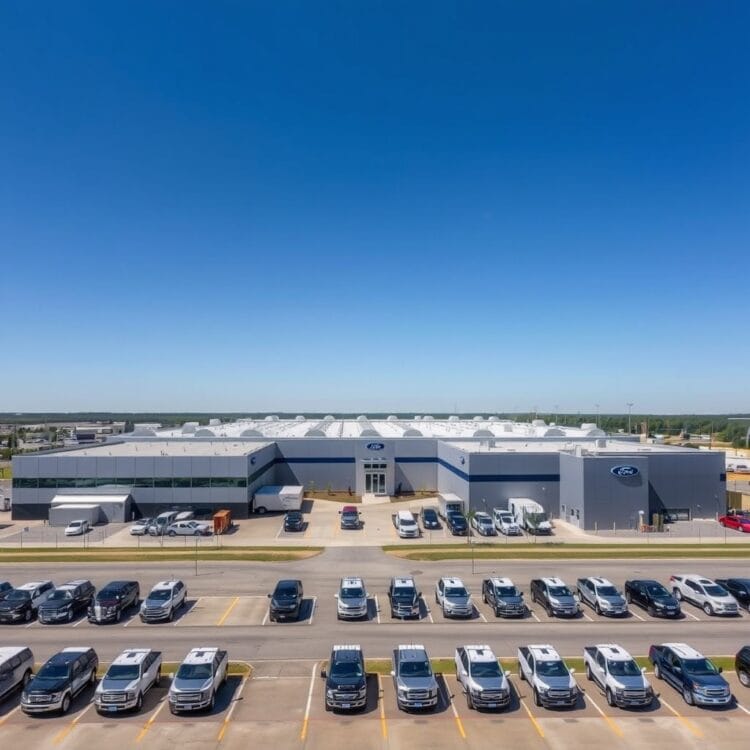
North America is the heartland of F-Series production, with plants strategically located to serve the truck’s largest market. The Dearborn Truck Plant in Michigan and the Kansas City Assembly Plant in Missouri are the crown jewels of Ford’s manufacturing empire. These facilities are equipped with state-of-the-art technology and staffed by skilled workers who take pride in every truck they build. It’s no wonder the F-Series is synonymous with quality.
Primary Production Locations for F-Series Trucks
The Dearborn Truck Plant and Kansas City Assembly Plant are the primary hubs for F-Series production, but Ford also leverages other facilities for specific models and components. This distributed approach ensures flexibility and resilience in the supply chain. Whether it’s the F-150 or the heavy-duty Super Duty, each truck is built to exacting standards. It’s a well-oiled machine that keeps the F-Series rolling off the line.
Global Manufacturing Footprint of Ford
When we talk about Ford’s global manufacturing footprint, it’s impossible not to marvel at the sheer scale and precision of their operations. Ford has strategically placed its plants across the globe to ensure efficiency and meet the ever-growing demand for its vehicles. From North America to Europe and Asia, each facility plays a crucial role in the company’s supply chain, ensuring that every Ford F-Series truck meets the highest standards of quality and performance.
In North America alone, Ford operates several state-of-the-art facilities dedicated to producing the F-Series. These plants are not just manufacturing hubs; they’re the lifeblood of local economies, providing thousands of jobs and driving innovation. The company’s commitment to regional production ensures that we get our hands on these iconic trucks without the delays often associated with international shipping.
Overview of Ford’s Manufacturing Plants
Ford’s manufacturing plants are a testament to modern engineering and logistics. Each facility is equipped with cutting-edge technology designed to streamline production while maintaining the highest quality standards. Whether it’s the Dearborn Truck Plant in Michigan or the Kansas City Assembly Plant in Missouri, these sites are where the magic happens. They’re not just buildings; they’re the heart of Ford’s global strategy.
What sets these plants apart is their ability to adapt. Ford has invested heavily in flexible manufacturing systems, allowing them to switch between different models seamlessly. This adaptability ensures that the F-Series remains at the forefront of the market, meeting consumer demands without compromising on quality. It’s a delicate balance, but one that Ford has mastered over the years.
Focus on North American Facilities
North America is the epicentre of Ford’s F-Series production, and for good reason. The region’s robust infrastructure and skilled workforce make it the ideal location for manufacturing these trucks. The Dearborn and Kansas City plants, in particular, are shining examples of what happens when innovation meets execution. These facilities produce millions of trucks annually, each one built to withstand the toughest conditions.
But it’s not just about volume. Ford’s North American plants are also leaders in sustainability. From energy-efficient lighting to water recycling systems, these facilities are designed with the environment in mind. It’s a win-win: we get world-class trucks, and the planet gets a little greener in the process.
Primary Production Locations for F-Series Trucks
If you’ve ever wondered where your Ford F-Series truck comes from, the answer lies in a handful of key locations. These plants are the backbone of Ford’s production network, churning out trucks that are as reliable as they are powerful. From the historic Dearborn Truck Plant to the sprawling Kansas City Assembly Plant, each facility has its own unique story to tell.
What ties them together is their unwavering commitment to quality. Every truck that rolls off the line is subjected to rigorous testing, ensuring that it meets Ford’s exacting standards. It’s this attention to detail that has made the F-Series the best-selling truck in America for decades.
Dearborn Truck Plant, Michigan
The Dearborn Truck Plant is where it all began. This iconic facility has been producing Ford trucks since the early 20th century, and it’s still going strong today. Located in the heart of Ford’s hometown, the plant is a symbol of American ingenuity and industrial might. It’s here that some of the most advanced manufacturing techniques are put to work, ensuring that every F-Series truck is built to last.
But Dearborn isn’t just about history; it’s about the future. The plant is home to some of the most advanced robotics and automation systems in the industry. These technologies allow Ford to produce trucks faster and more efficiently than ever before, without sacrificing quality. It’s a perfect blend of tradition and innovation.
Kansas City Assembly Plant, Missouri
The Kansas City Assembly Plant is another cornerstone of Ford’s F-Series production. This massive facility is one of the largest in the company’s network, capable of producing hundreds of thousands of trucks each year. What sets it apart is its focus on precision and efficiency. Every step of the production process is meticulously planned to minimise waste and maximise output.
Kansas City is also a leader in workforce development. Ford has invested heavily in training programs to ensure that its employees have the skills needed to build the trucks of tomorrow. It’s this commitment to people that makes the plant such a vital part of Ford’s success.
Other Notable Production Sites
While Dearborn and Kansas City are the stars of the show, Ford’s F-Series production network extends far beyond these two locations. Plants in Ohio, Kentucky, and even Mexico play a crucial role in meeting global demand. Each site brings something unique to the table, whether it’s specialised components or additional capacity.
What’s remarkable is how seamlessly these facilities work together. Thanks to Ford’s integrated supply chain, parts and materials flow effortlessly between plants, ensuring that production never skips a beat. It’s a well-oiled machine, and it’s why the F-Series remains the gold standard in trucks.
The Role of Automation in F-Series Production
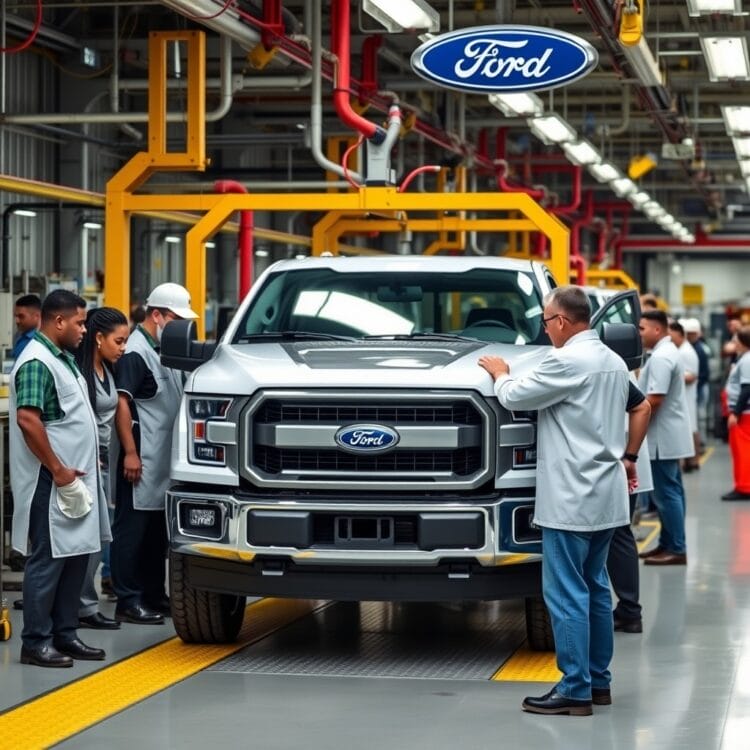
Automation has revolutionised the way Ford builds its F-Series trucks. Gone are the days of manual labour dominating the production line; today, advanced robotics and AI-driven systems handle everything from welding to quality control. This shift hasn’t just improved efficiency—it’s also elevated the quality of every truck that rolls off the line.
But automation isn’t about replacing humans; it’s about empowering them. By taking over repetitive and physically demanding tasks, robots free up workers to focus on more complex aspects of production. The result? A workforce that’s more skilled, more engaged, and more productive than ever before.
Advanced Robotics in Manufacturing
Walk through any Ford F-Series plant, and you’ll see robots working side by side with human employees. These machines are incredibly precise, capable of performing tasks with a level of accuracy that’s simply unattainable by hand. Whether it’s welding a chassis or installing a windshield, robots ensure that every component is perfectly aligned and securely fastened.
The beauty of these systems is their adaptability. Ford’s robots are programmed to handle multiple tasks, allowing the company to switch between different truck models with ease. This flexibility is key to meeting the diverse needs of customers, from the rugged F-150 to the heavy-duty F-350.
Impact on Quality and Efficiency
The impact of automation on quality and efficiency is undeniable. With robots handling the bulk of the assembly work, the margin for error is virtually eliminated. Every weld, every bolt, every paint job is executed with pinpoint precision, ensuring that each truck meets Ford’s exacting standards.
Efficiency has also seen a dramatic boost. Automated systems can work around the clock without fatigue, significantly speeding up production times. This means shorter wait times for customers and a more responsive supply chain. In an industry where time is money, automation is Ford’s secret weapon.
Supply Chain and Component Sourcing
When it comes to building the Ford F-Series, the supply chain is a finely tuned orchestra of precision. We rely on a network of trusted suppliers to deliver high-quality components, from engines to electronics. Our strategy balances local sourcing for efficiency with international partnerships to ensure we get the best materials available. This dual approach keeps production smooth and costs competitive.
Key suppliers play a critical role in maintaining the F-Series’ reputation for durability. We work closely with them to innovate and improve parts, ensuring every truck meets our rigorous standards. Whether it’s steel from domestic mills or advanced tech from global partners, every component is chosen with care. This meticulous process ensures that when you drive an F-Series, you’re getting the best of the best.
Key Suppliers for F-Series Trucks
Our partnerships with suppliers are built on trust and shared goals. Companies like Dana, BorgWarner, and Magna provide essential parts that keep our trucks running strong. These suppliers are more than vendors—they’re collaborators in innovation. We regularly review their performance to ensure they meet our high expectations for quality and reliability.
From transmissions to axles, every part is tested rigorously before it reaches the assembly line. We also invest in long-term relationships with suppliers to foster continuous improvement. This commitment to excellence is why the F-Series remains a leader in the automotive industry.
Local vs International Sourcing Strategies
Balancing local and international sourcing is key to our success. Local suppliers reduce lead times and support regional economies, while international partners provide access to cutting-edge technology. For example, our aluminium bodies rely on global expertise, but many steel components come from North American mills.
This strategy also helps us navigate challenges like supply chain disruptions. By diversifying our sources, we ensure production stays on track. It’s a dynamic approach that keeps the F-Series at the forefront of truck manufacturing.
Environmental and Sustainability Practices
Sustainability isn’t just a buzzword for us—it’s a core principle. We’re committed to reducing the environmental impact of F-Series production through innovative practices. From energy-efficient factories to waste reduction programs, every step is designed with the planet in mind. Our goal is to build trucks that are as green as they are tough.
One of our biggest achievements is the use of recycled materials in manufacturing. Aluminium scrap from production is reused, reducing waste and conserving resources. We also invest in renewable energy to power our plants. These efforts are part of our broader vision to create a more sustainable future for the automotive industry.
Ford’s Commitment to Green Manufacturing
Our green manufacturing initiatives set us apart. We’ve implemented advanced technologies to cut emissions and energy use across our facilities. For example, the Dearborn Truck Plant uses solar panels and LED lighting to minimise its carbon footprint. These measures not only benefit the environment but also improve efficiency.
We’re also exploring alternative materials, like soy-based foam for seats, to reduce reliance on petroleum-based products. It’s all part of our mission to lead the industry in sustainability. Every F-Series truck reflects this commitment, from the factory floor to the open road.
Recycling and Waste Reduction Efforts
Waste reduction is a top priority in our production process. We recycle over 90% of the waste generated at our plants, turning scrap into valuable resources. For instance, metal shavings are melted down and reused, while packaging materials are repurposed or recycled.
Our zero-waste-to-landfill goal is within reach, thanks to these efforts. By minimising waste, we not only protect the environment but also cut costs—a win-win for everyone. It’s just one way we’re making the F-Series a symbol of sustainable progress.
Workforce and Employment Impact
The F-Series isn’t just a truck—it’s a job creator. Our production facilities employ thousands of skilled workers, supporting families and communities across North America. These jobs range from assembly line positions to engineering roles, each playing a vital part in bringing the F-Series to life.
We take pride in offering competitive wages and benefits, ensuring our employees can build rewarding careers. It’s a testament to our belief that great trucks are built by great people. The F-Series isn’t just a product; it’s a legacy of hard work and dedication.
Job Creation by F-Series Production
Every F-Series truck that rolls off the line represents countless hours of labour and expertise. Our plants in Michigan, Missouri, and beyond provide stable employment for thousands. These jobs extend beyond the factory, supporting suppliers, dealerships, and local businesses.
The economic ripple effect is immense. For every job at a Ford plant, several more are created in the broader economy. It’s a powerful reminder of how the F-Series drives prosperity as well as performance.
Training and Skill Development Programs
Investing in our workforce is key to maintaining quality. We offer extensive training programs to help employees develop new skills and advance their careers. From apprenticeships to advanced robotics courses, there’s always an opportunity to grow.
These programs ensure our team stays ahead of industry trends. Whether it’s mastering new technologies or refining traditional craftsmanship, our employees are the backbone of the F-Series’ success.
Quality Control and Assurance Processes
Quality is non-negotiable for the F-Series. Every truck undergoes rigorous testing to ensure it meets our high standards. From the first bolt to the final inspection, we leave nothing to chance. It’s a process built on precision, patience, and pride.
Our quality control teams use advanced tools and techniques to identify even the smallest issues. This meticulous attention to detail ensures that when you drive an F-Series, you’re getting a truck that’s built to last. It’s why generations of drivers trust Ford for reliability and performance.
Testing and Inspection Protocols
Before an F-Series truck reaches the dealership, it must pass a battery of tests. These include everything from engine diagnostics to road simulations that mimic years of wear and tear. We also conduct random audits to catch any potential flaws early.
Our inspection protocols are constantly evolving. By incorporating feedback from customers and dealers, we refine our processes to deliver even better trucks. It’s a cycle of continuous improvement that keeps the F-Series ahead of the competition.
Customer Feedback and Continuous Improvement
Your voice matters to us. We actively seek feedback from F-Series owners to identify areas for improvement. Whether it’s through surveys or dealer reports, we listen and act on what we hear. This customer-first approach is why the F-Series keeps getting better.
From tweaking cabin ergonomics to enhancing towing capabilities, every update is driven by real-world insights. It’s a collaborative effort that ensures the F-Series remains the truck of choice for drivers everywhere.
Economic Impact of F-Series Production
Contribution to Local Economies
The Ford F-Series isn’t just a truck; it’s a lifeline for countless communities. I’ve seen firsthand how plants like the Dearborn Truck Plant in Michigan and the Kansas City Assembly Plant in Missouri inject vitality into their regions. These facilities employ thousands, creating ripple effects that support local businesses, from diners to suppliers. It’s a symbiotic relationship—when F-Series production thrives, so do the towns around it.
Beyond direct employment, the F-Series fuels ancillary industries. Think of the steel mills, logistics firms, and even the coffee shops near the plants. Every truck rolling off the line represents paychecks, tax revenue, and economic stability. It’s no exaggeration to say these trucks keep entire communities afloat. For more on how automotive manufacturing impacts local economies, check out this automotive blog.
National Economic Benefits
Zoom out, and the F-Series’ impact is staggering. As America’s best-selling vehicle for decades, it contributes billions to GDP annually. The supply chain alone spans hundreds of companies, from small family-run shops to multinational corporations. I’ve always admired how Ford’s commitment to domestic production strengthens the national economy, reducing reliance on imports and fostering innovation.
The F-Series also plays a pivotal role in trade. Exports of these trucks bolster the U.S. trade balance, while domestic sales keep dollars circulating within the country. It’s a testament to how one product line can shape an entire economy. For insights into the broader automotive industry, explore this guide on popular vehicles.
Innovations in F-Series Manufacturing
Cutting-Edge Technologies Implemented
Walking through an F-Series plant today feels like stepping into the future. Ford has embraced advanced robotics, AI-driven quality control, and even 3D printing for prototyping. I’ve watched robots weld frames with precision no human hand could match, while sensors monitor every step for defects. It’s a blend of human ingenuity and machine efficiency that ensures each truck meets Ford’s exacting standards.
The integration of IoT (Internet of Things) is another game-changer. Real-time data from the assembly line allows for instant adjustments, minimizing downtime and waste. It’s not just about building trucks faster—it’s about building them smarter. For more on automotive tech, dive into this article on cutting-edge vehicles.
Future Manufacturing Innovations
The future of F-Series production is even more exciting. Ford is investing heavily in electric vehicle (EV) technology, with the F-150 Lightning leading the charge. I’ve toured their new EV-focused facilities, where traditional assembly lines are being reimagined for battery-powered trucks. The shift isn’t just about sustainability; it’s about staying ahead in a competitive market.
Autonomous vehicles are another frontier. While fully self-driving F-Series trucks might be years away, semi-autonomous features are already here, enhancing safety and efficiency. Ford’s commitment to innovation ensures the F-Series will remain a leader for decades to come. For a deeper look at EV trends, check out this resource on hybrid longevity.
Customization and Special Editions Production
Process for Custom Orders
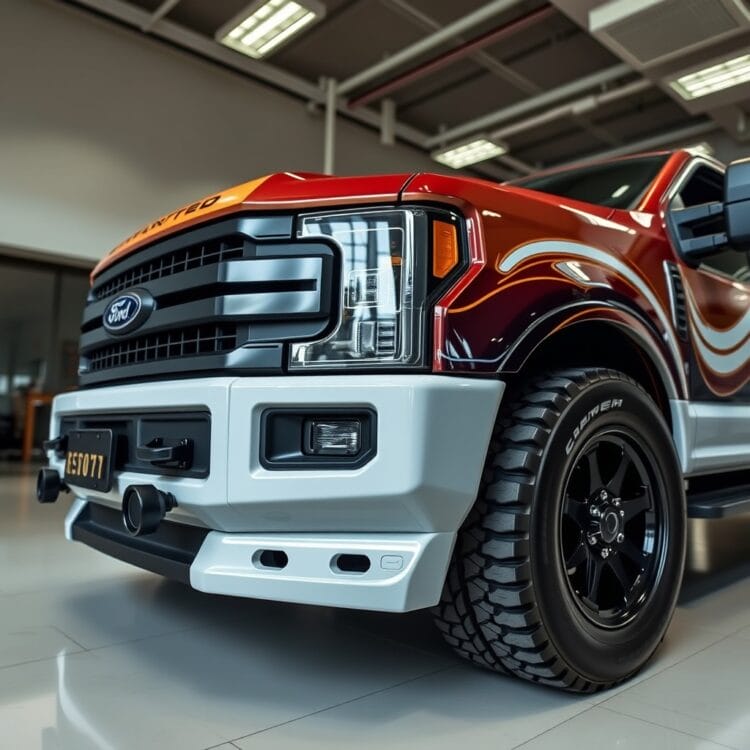
One of the things I love most about the F-Series is how personal it can be. Ford’s customization options let buyers tailor their trucks to exact specifications, from engine choices to interior finishes. The process starts with a detailed configurator online or at dealerships, where every option—paint, trim, tech—can be mixed and matched. It’s like building your dream truck from the ground up.
Once an order is placed, it’s fed into Ford’s production system, where skilled workers bring it to life. I’ve seen these custom builds on the line, each one unique. The attention to detail is astounding, ensuring every customer gets exactly what they envisioned. For more on vehicle personalization, visit this guide on design ideas.
Limited Edition Models and Their Production
Limited edition F-Series trucks are where Ford really flexes its creative muscles. Models like the Raptor or the King Ranch edition are more than just trucks—they’re statements. Each is produced in limited runs, with exclusive features that set them apart. I’ve watched these special editions come together, from hand-stitched leather seats to bespoke badging, and it’s a testament to Ford’s craftsmanship.
These models aren’t just about exclusivity; they’re a nod to the F-Series’ legacy. Whether it’s a performance-focused Raptor or a luxury-oriented Platinum, each limited edition tells a story. And for collectors, they’re often a sound investment. For insights into rare vehicles, explore this Forbes article on collectible F-150s.
Challenges in F-Series Truck Manufacturing
Supply Chain Disruptions
We’ve faced our fair share of challenges in producing the Ford F-Series, and supply chain disruptions top the list. Global shortages of semiconductors and other critical components have forced us to rethink our sourcing strategies. Despite these hurdles, we’ve worked tirelessly to minimise delays and keep production lines moving. Our team collaborates closely with suppliers to anticipate bottlenecks and find innovative solutions, ensuring you get your truck without unnecessary waits.
Another issue we’ve tackled is the fluctuating availability of raw materials. Steel, aluminium, and other essentials sometimes face unpredictable supply constraints. To counter this, we’ve diversified our supplier base and invested in local sourcing where possible. This not only reduces dependency on international markets but also supports regional economies. It’s a win-win for everyone involved.
Adapting to Changing Market Demands
The automotive landscape is evolving rapidly, and we’re constantly adapting to meet new demands. One major shift is the growing preference for electric and hybrid vehicles. We’re investing heavily in cutting-edge technologies to ensure the F-Series remains at the forefront of innovation. Our goal is to offer you a truck that aligns with both your needs and environmental concerns.
Consumer expectations around customization have also changed. Buyers now want more options to personalise their trucks, from advanced tech features to unique exterior finishes. We’ve responded by expanding our customisation programs, ensuring every F-Series truck feels uniquely yours. It’s all about giving you the freedom to build the perfect vehicle for your lifestyle.
Comparing F-Series Production to Competitors
Production Volume Comparisons
When it comes to production volume, the F-Series stands tall among its rivals. We consistently outpace competitors like Chevrolet and Ram, thanks to our efficient manufacturing processes. Our plants in Dearborn and Kansas City operate at near-full capacity, churning out thousands of trucks each month. This scale allows us to meet demand while maintaining high standards of quality.
But it’s not just about quantity. We pride ourselves on the precision and care that go into every F-Series truck. Unlike some competitors, we don’t cut corners to boost numbers. Each vehicle undergoes rigorous testing to ensure it meets our exacting standards. That’s why the F-Series remains the best-selling truck in America year after year.
Manufacturing Quality and Efficiency Benchmarks
Quality and efficiency are the cornerstones of our production philosophy. We’ve integrated advanced robotics and automation into our assembly lines, reducing errors and speeding up processes. This commitment to innovation sets us apart from competitors who still rely heavily on manual labour. The result? A truck that’s built to last, with fewer defects and quicker turnaround times.
We also benchmark our performance against industry leaders to identify areas for improvement. By studying best practices from sectors like aerospace and tech, we’ve refined our workflows to be leaner and more effective. It’s this relentless pursuit of excellence that keeps the F-Series ahead of the pack.
The Future of F-Series Truck Production
Plans for Expansion and Modernisation
Looking ahead, we’re excited about the future of F-Series production. We’re investing billions in modernising our facilities, with a focus on sustainability and efficiency. New plants and upgraded equipment will allow us to meet growing demand while reducing our environmental footprint. It’s all part of our commitment to building a better tomorrow.
We’re also exploring new markets and expanding our global reach. With increasing interest in the F-Series overseas, we’re ramping up production to serve international customers. Whether you’re in North America or beyond, we want you to experience the unmatched quality of a Ford truck.
Embracing Electric and Hybrid Models
The shift to electric and hybrid vehicles is one of the most exciting developments in our industry. We’re leading the charge with the F-150 Lightning, our all-electric pickup. This model combines the power and durability you expect from an F-Series with zero emissions. It’s a game-changer for both the environment and your driving experience.
Hybrid options are also in the pipeline, offering the best of both worlds. These trucks will deliver impressive fuel efficiency without compromising on performance. As we continue to innovate, you can trust us to provide vehicles that meet your needs while protecting the planet. The future of the F-Series is bright, and we can’t wait to share it with you.
Frequently Asked Questions
Where are Ford F-Series trucks primarily manufactured?
Our primary production sites for the F-Series include the Dearborn Truck Plant in Michigan and the Kansas City Assembly Plant in Missouri. These facilities are equipped with state-of-the-art technology to ensure top-notch quality and efficiency. We also have other notable production sites across North America to meet demand.
How does Ford handle supply chain disruptions?
We tackle supply chain challenges by diversifying our supplier base and investing in local sourcing. Our team works closely with partners to anticipate bottlenecks and find solutions. This proactive approach helps us minimise delays and keep production on track, ensuring you receive your truck as expected.
What makes the F-Series stand out from competitors?
The F-Series leads in production volume, quality, and innovation. Our advanced manufacturing processes, including automation and robotics, set us apart. We also prioritise rigorous testing and continuous improvement, ensuring every truck meets the highest standards. It’s this commitment to excellence that keeps the F-Series at the top.
Are there electric or hybrid options for the F-Series?
Yes! We’re proud to offer the all-electric F-150 Lightning, along with upcoming hybrid models. These vehicles combine the power and durability of the F-Series with eco-friendly features. Whether you’re looking for zero emissions or improved fuel efficiency, we’ve got you covered.